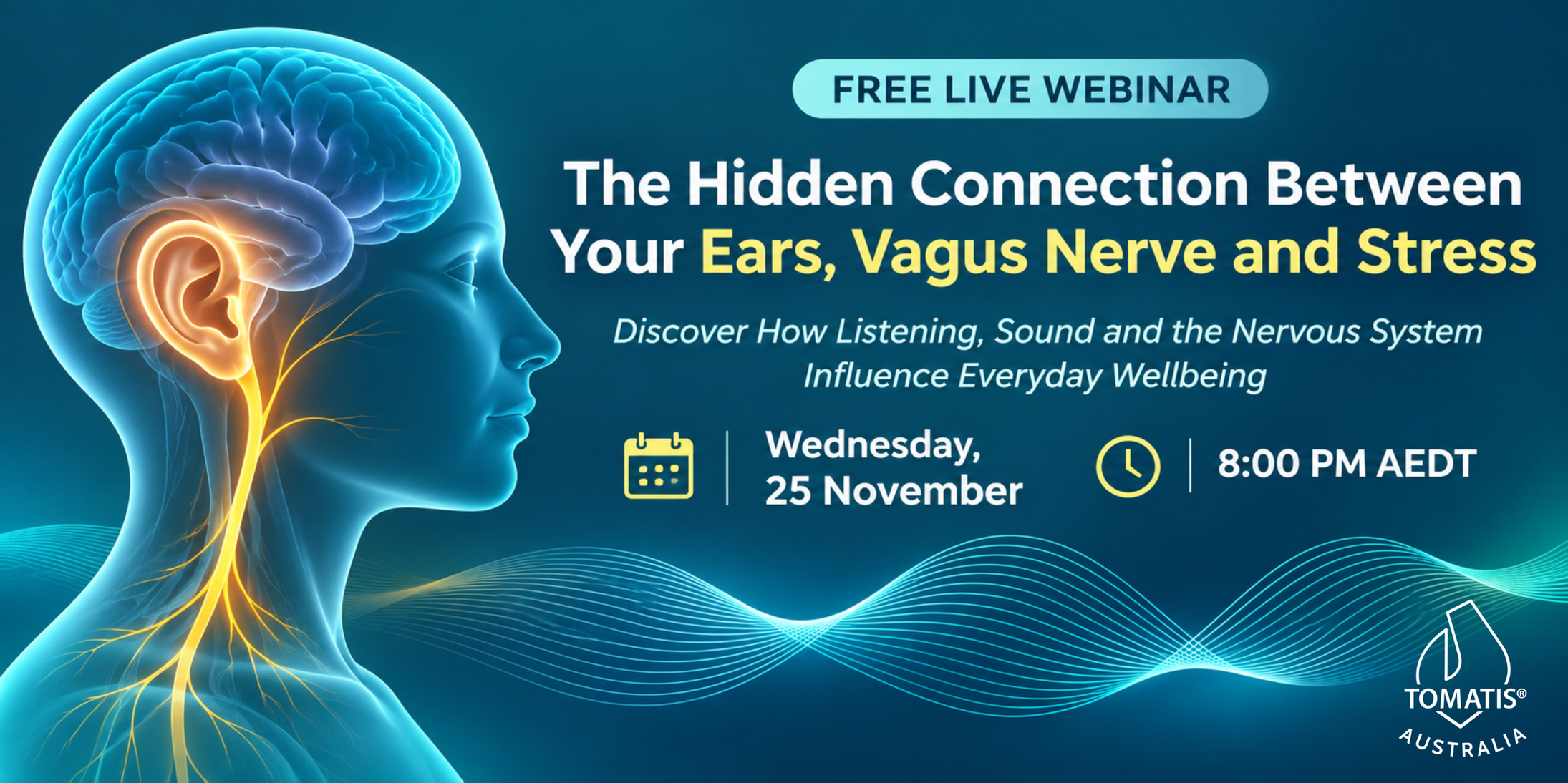
The Hidden Connection Between Your Ears, Vagus Nerve and Stress
Have You Ever Wondered Why Stress Changes the Way You Hear the World?
Have you noticed how everyday sounds become more irritating when you're stressed?
A noisy conversation feels exhausting. Background sounds become distracting. Even the television seems louder than usual.
But what if there's more happening beneath the surface?
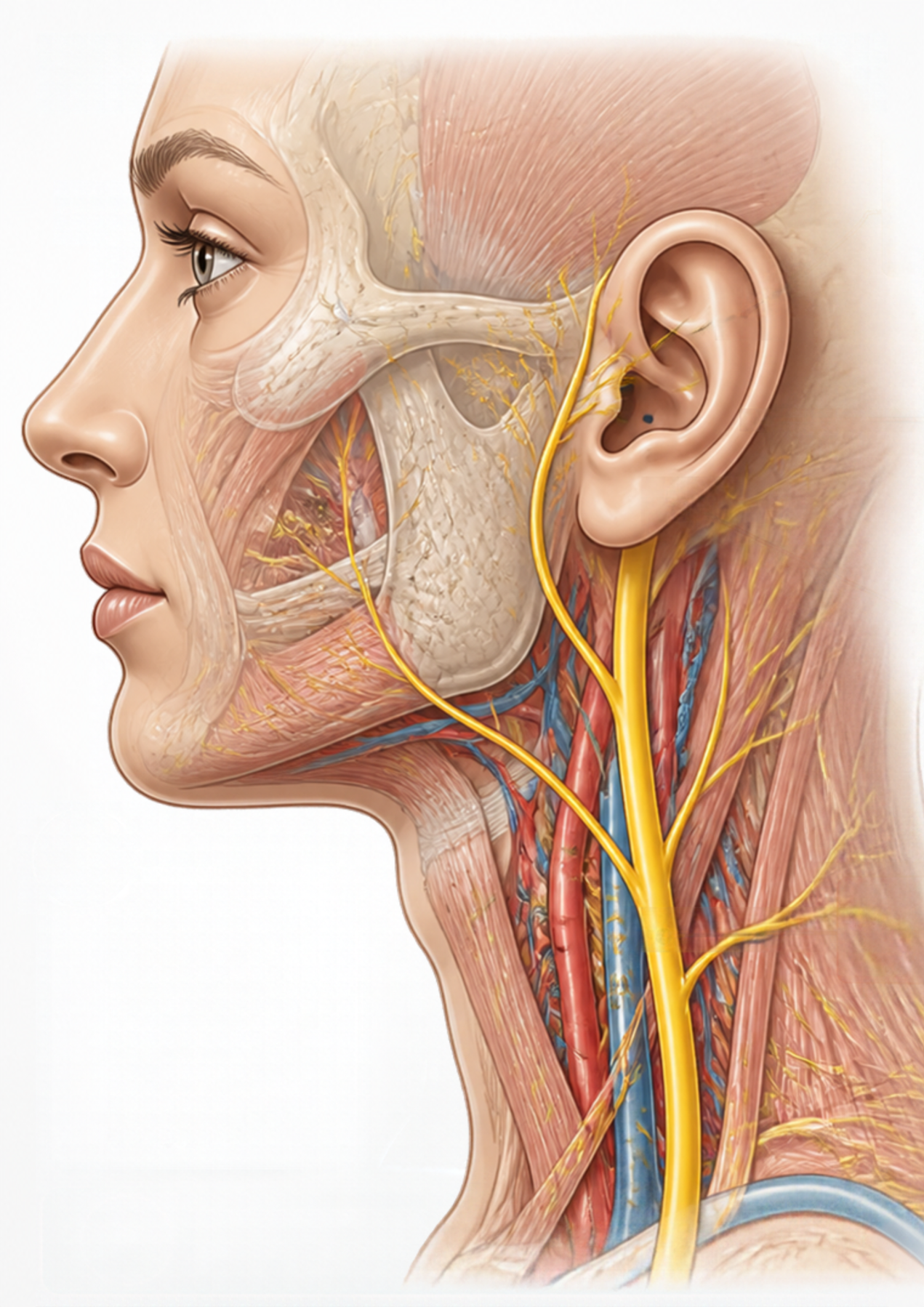
Your ears, brain and nervous system are connected in fascinating ways that influence how you experience sound and respond to stress.
One important part of this connection is the vagus nerve, a major communication pathway involved in the body's rest and recovery processes.
Why Does This Connection Matter?
Stress doesn't just affect how we feel emotionally.
It can also influence how we concentrate, communicate, listen and respond to the world around us.
For some people, this means struggling to follow conversations in noisy environments. For others, it may involve feeling constantly alert, easily distracted or mentally exhausted after a busy day.
Understanding the relationship between sound and the nervous system can help us recognise these experiences and respond more effectively.
Rather than simply trying to tolerate more stress, we can explore how the body responds to everyday demands and what may help it recover.
Days
Hours
Minutes
Seconds
Could Listening Play a Role in Supporting Wellbeing?
Sound is part of our everyday experience.
A familiar voice can feel reassuring. Gentle music may help us unwind. Meanwhile, loud or unpredictable sounds can sometimes increase discomfort.
But why?
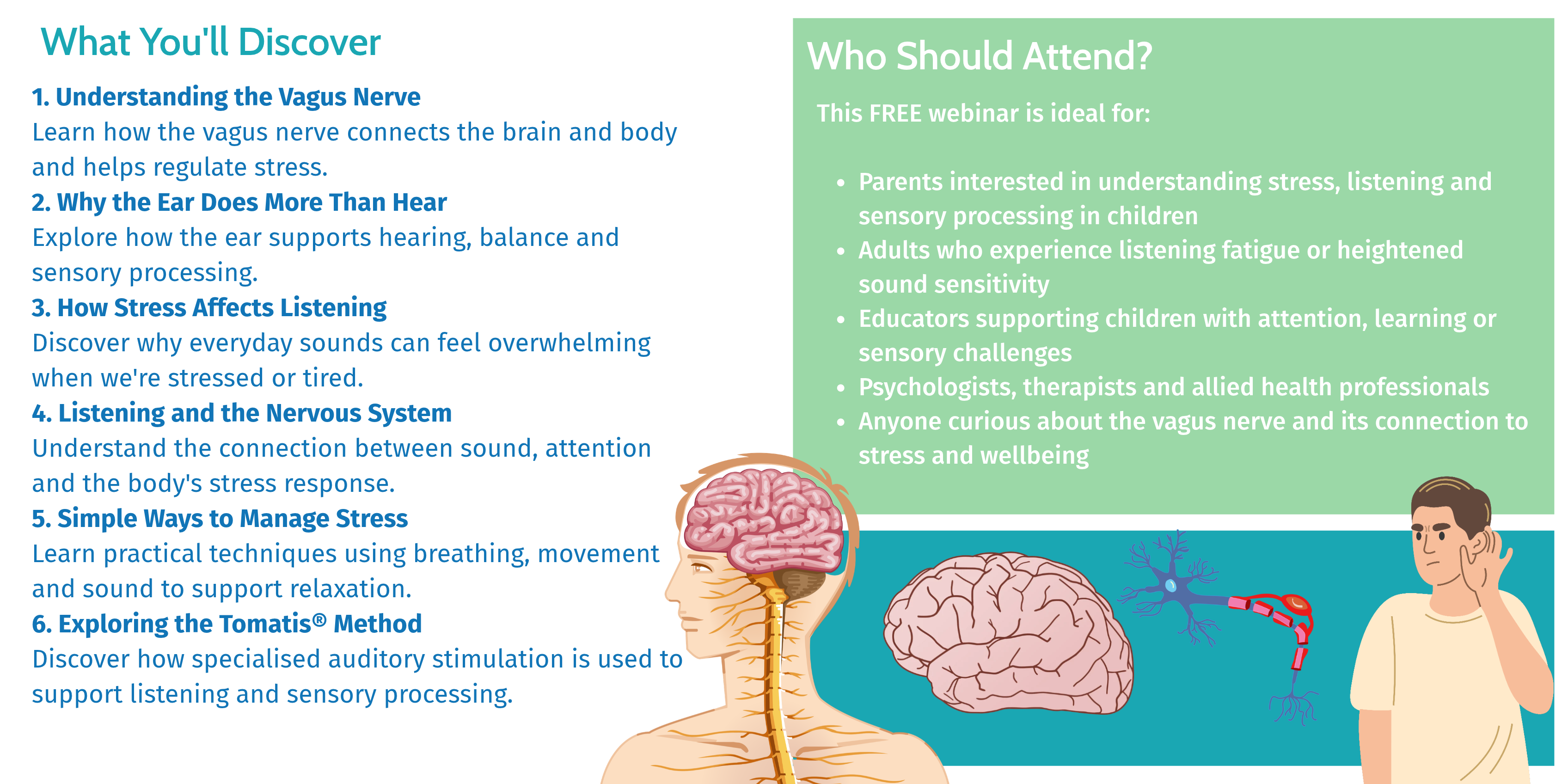
During this webinar, Françoise will discuss how auditory stimulation is being explored in relation to listening and nervous system regulation.
We'll also introduce the Tomatis® Method, its approach to auditory stimulation and why individual needs matter when considering listening-based support.

Register Here


© 2026 Tomatis® Australia.
All rights reserved.