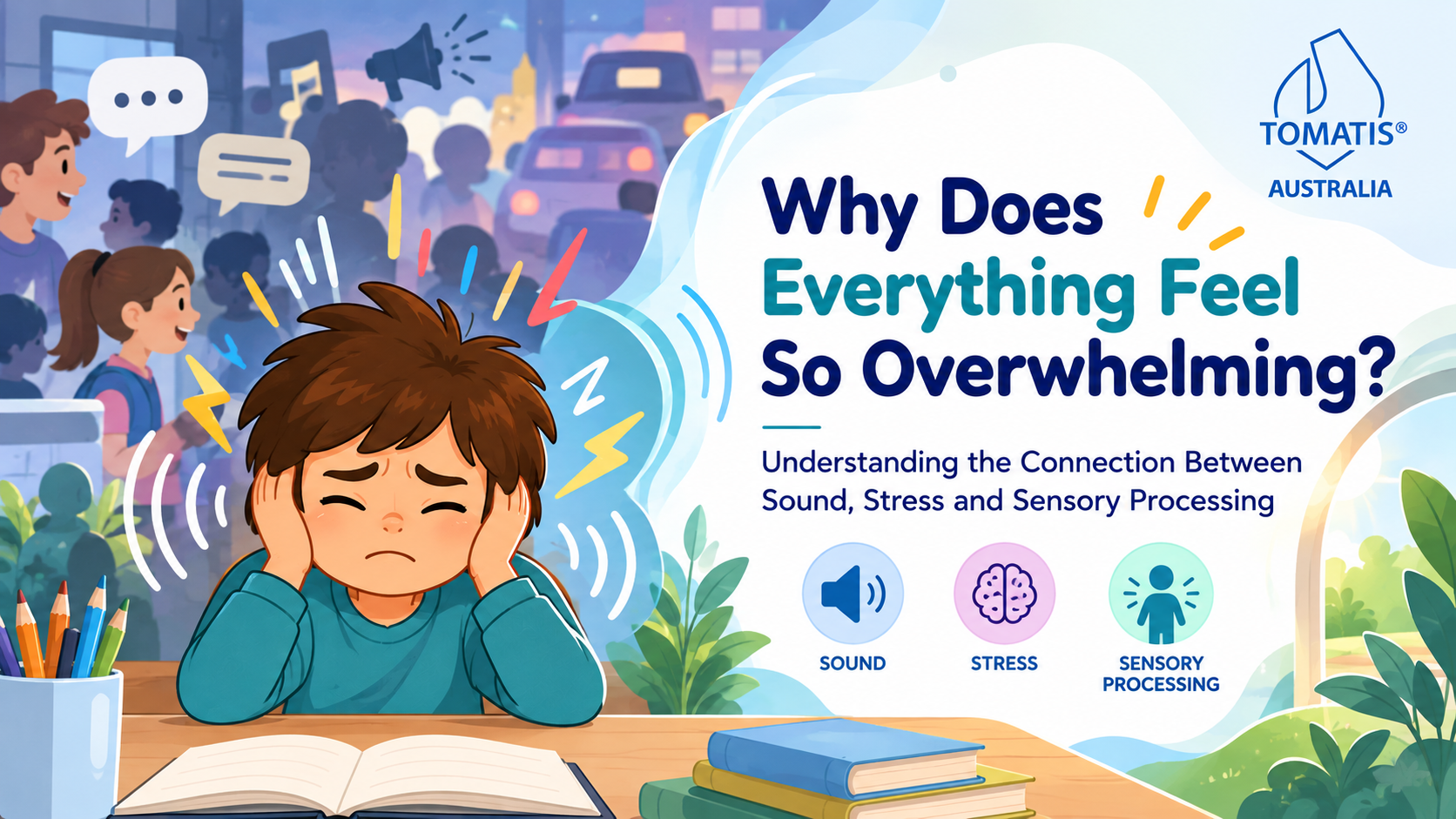
Why Does Everything Feel So Overwhelming?
Understanding the Connection Between Sound, Stress and Sensory Processing
Have you ever noticed how ordinary sounds suddenly become unbearable when you're tired or stressed?
The television seems too loud. Conversations become difficult to follow. Even a simple question can feel like one demand too many.
Now imagine a child experiencing this in a busy classroom every day.
For some people, sound, stress and sensory processing interact in ways that make everyday situations feel overwhelming.
But why does this happen? And why are some days more difficult than others?
Is It Behaviour, Stress or Sensory Overload?
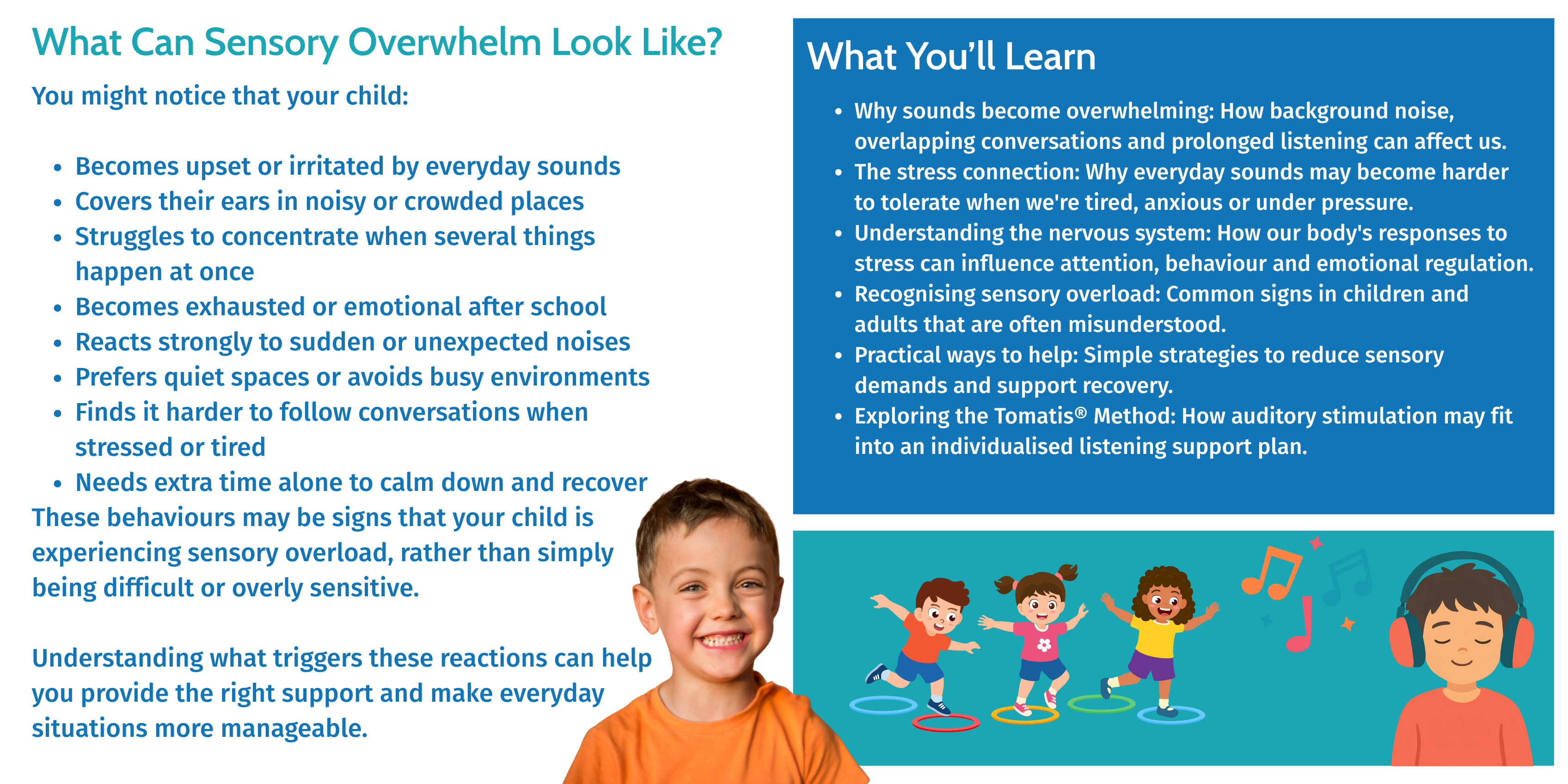
A child becomes upset after school. An adult withdraws after a busy meeting. Someone becomes irritated by sounds they normally tolerate.
These reactions are sometimes misunderstood as poor behaviour, impatience or overreacting.
But what if the nervous system is already working hard to manage too much information?
Understanding what's happening beneath the surface can change how we respond.
During this webinar, we'll explore how sensory demands can build throughout the day and why recognising these patterns matters.
Days
Hours
Minutes
Seconds

Small Changes Can Make a Big Difference
Managing sensory overwhelm isn't always about learning to tolerate more.
Sometimes, it's about understanding our limits, reducing unnecessary demands and giving the nervous system opportunities to settle.
We'll discuss practical approaches that may help children and adults feel more comfortable, supported and confident in everyday environments.
Join Françoise Nicoloff as we explore the connection between sensory overwhelm, the nervous system and emotional wellbeing, and discover practical ways to make everyday life more manageable.

Register Here


© 2026 Tomatis® Australia.
All rights reserved.